

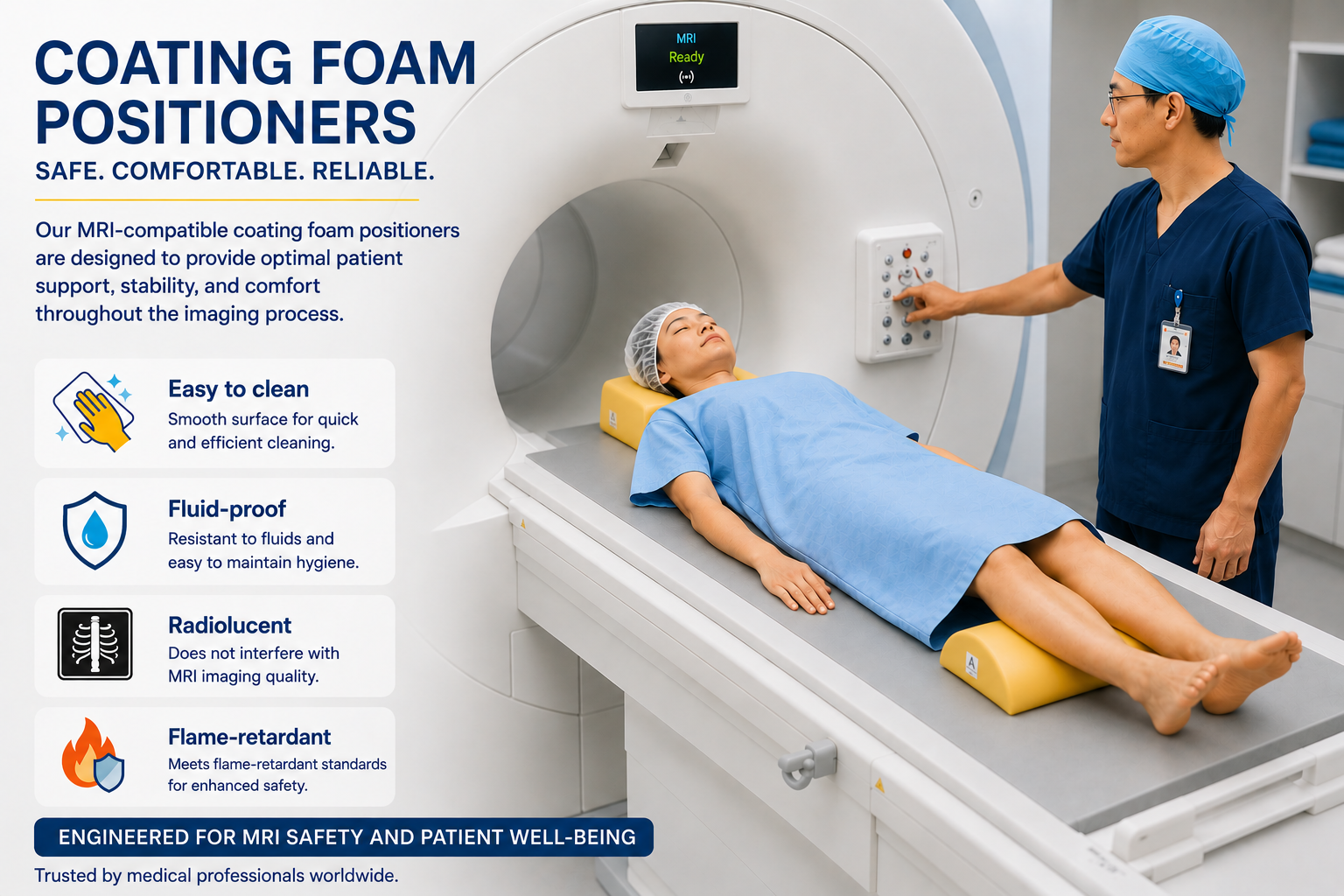
Today, medical technology has evolved. Coating foam positioners (also widely referred to in clinical settings as coated foam pads) have emerged as the industry gold standard, offering a hybrid solution that delivers the lightweight comfort of high-density foam alongside a robust, medical-grade protective barrier.
But what are the clinical advantages and hygiene benefits of using these advanced fluid-resistant positioners compared to uncoated foam or gel-based alternatives in the operating room? Let’s explore the clinical evidence and workflow realities.
1. High-Level Hygiene Benefits: Cross-Contamination Prevention & Infection Control
The most critical challenge with traditional uncoated foam is its open-cell, porous structure. In the OR, it acts like a sponge. Bodily fluids, blood, saline, and harsh surgical prep solutions easily seep into the core of the foam. Even if the surface appears dry, the interior remains a damp breeding ground for pathogens, posing a severe risk of cross-contamination and surgical site infections (SSIs). Consequently, uncoated foam must often be discarded after a single use, driving up medical waste and hospital expenses.The Coated Foam Impervious Barrier
Advanced coating foam positioners solve this systemic issue by utilizing a seamless, non-porous, and fluid-resistant medical coating. This premium skin creates a 100% impervious barrier. Fluids stay on the surface, allowing OR staff to execute immediate, complete spray-and-wipe disinfection using standard hospital-grade germicides between cases, significantly accelerating patient turnover.Clinical Insight from the Field:
"During multi-hour orthopedic surgeries involving heavy fluid irrigation, we used to see fluids seep straight through standard foam, forcing us to discard the pad immediately. Switching to seamless coated foam pads allowed our circulating nurses to fully sanitize the surface within minutes, ensuring a safer environment for the next patient without compromising infection control protocols."
The Vulnerability of Gel Alternatives
While gel-based alternatives are also fluid-resistant, they carry a hidden vulnerability: structural degradation. Over time, the outer polyurethane film of a gel pad can develop micro-tears or punctures from sharp surgical instruments, heavy usage, or improper storage. Once compromised, the inner gel matrix can harbor sub-surface bacteria that cannot be reached by topical disinfectants, rendering the positioner a biohazard.2. Superior Clinical Advantages: Pressure Distribution & Skin Integrity
Intraoperative tissue damage can develop in as little as two hours during prolonged surgical procedures. Achieving effective pressure injury prevention requires advanced weight redistribution and microclimate management, as outlined in the global clinical guidelines by the National Pressure Injury Advisory Panel (NPIAP).Advanced Microclimate Control and Shear Reduction
Uncoated foam creates high friction against the patient’s skin. When patients are shifted or placed in steep Trendelenburg positions, this friction translates into severe shear forces that tear underlying capillaries. Furthermore, trapped fluids alter the skin's microclimate, leading to tissue maceration.These premium coated foam pads utilize low-friction, biocompatible coatings that allow the patient's skin to glide smoothly during micro-adjustments, significantly reducing shear stress. Because the surface is completely hydrophobic, surgical prep solutions or perspiration cannot pool beneath the patient, maintaining a stable, dry microclimate.
Superior Support Mechanics vs. Gel
Gel positioners are often perceived as highly contouring, but they suffer from "bottoming out" under heavy bony prominences (such as the sacrum, scapula, or heels) during long cases. Clinical data indicates that once a gel pad bottoms out, the localized pressure spikes drastically, elevating the risk of deep tissue injury.Conversely, high-quality fluid-resistant positioners utilize multi-layered, high-density viscoelastic foam cores. This provides dynamic, uniform support that redistributes the patient's weight across the maximum surface area without losing structural integrity or changing consistency in cold OR environments.
3. OR Efficiency and Ergonomics: Staff Safety & Rapid Turnover
Hospital efficiency is deeply tied to OR turnover time and the physical well-being of the nursing staff. This is where the physical properties of these patient positioning devices heavily influence daily operations, aligning with AORN (Association of periOperative Registered Nurses) guidelines for safe patient handling.| Operational Feature | Coating Foam Positioners | Uncoated Foam | Gel-Based Alternatives |
| Fluid Resistance | 100% Impervious Skin | Poor (Absorbent Sponge) | Excellent (Until punctured) |
| Turnover Efficiency | Optimizes OR Turnover Time | Low (Requires constant replacement) | Moderate (Requires heavy lifting/washing) |
| Ergonomic Safety | Ultra-lightweight & Ergonomic | Lightweight (But single-use) | Extremely Heavy (Risk of caregiver strain) |
| Long-Term Durability | High (Resists cracks and tears) | Extremely Low (Rapid wear) | Moderate (Prone to punctures) |
Eradicating Caregiver Strain
Gel-based positioners are notoriously heavy; a single lateral or prone positioning kit can weigh upwards of 15 to 20 pounds. Constantly lifting, transferring, washing, and storing these heavy gel pads places a significant physical burden on OR nurses, increasing the risk of occupational musculoskeletal injuries. Coating foam positioners offer the best of both worlds: the feather-light, easy-to-handle ergonomics of foam paired with the rugged durability and cleanability of a high-end medical device.Elevate Your Surgical Standards with Our Premium Coating Foam Positioners
At SHYICARE, we specialize in engineering next-generation patient positioning devices designed for the modern operating room. Our advanced line of medical-grade coating foam positioners features an elite, fluid-resistant, seamless skin engineered to withstand rigorous clinical environments. We provide a comprehensive range of anatomical designs—including head sections, lateral positioners, prone blocks, and extremity wedges—all designed to optimize pressure injury prevention, ensure strict infection control, and alleviate caregiver fatigue.📞 Ready to Optimize Your OR Turnover Time?
Don't compromise on patient safety or operational efficiency. [Click here to request a free product demonstration or contact our clinical specialists today] to see how our premium fluid-resistant positioners can reduce turnover times and elevate care standards in your facility.
Medical Content Reviewed by SHYICARE Clinical Engineering Team
How do coating foam positioners help prevent surgical site infections (SSIs)?
Unlike traditional porous foam that absorbs blood and bodily fluids, premium coating foam positioners feature a seamless, non-porous barrier. This prevents any fluid penetration into the core, allowing for 100% effective surface disinfection with hospital-grade wipes between surgeries, eliminating hidden pathogen reservoirs.
Do coated foam pads bottom out during long surgeries like gel pads do?
No. While gel positioners tend to displace horizontally and "bottom out" under heavy bony prominences over time, our advanced coating foam positioners utilize multi-layered, high-density viscoelastic foam. This structural core provides continuous, dynamic weight redistribution that maintains its shape and integrity even during extended procedures.
How do these positioners protect OR staff from injury?
Traditional gel kits can weigh 15-20 lbs, causing repetitive strain for nurses during setup and breakdown. Coated foam positioners provide the exact same clinical benefits but at a fraction of the weight, significantly reducing the risk of workplace musculoskeletal injuries while maximizing turnover efficiency.