

Silicone Positioners: The Gold Standard for Surgical Patient Positioning
In the evolving landscape of modern surgical care, maintaining optimal Operating Room (OR) safety is a critical priority. As surgeries become more complex, the risk of pressure-related injuries remains a significant challenge. While many facilities historically relied on gel positioners or standard foam, these often fall short in high-pressure, long-duration environments. Silicone positioners have emerged as the superior solution for surgical positioning, setting a new benchmark for anatomical protection.
1. Introduction: The Evolution of Patient Positioning Surgical positioning is a vital component of anesthesia and clinical outcomes. Historically, hospitals relied on foam pads that "bottomed out," or generic surgical support pads susceptible to material degradation and bacterial retention. Today, the clinical focus has shifted toward medical-grade silicone positioners. These devices provide a resilient, stable foundation that conforms to the human form, ensuring patients remain perfectly aligned throughout demanding interventions.
2. Clinical Evidence: Silicone vs. Polyurethane Gels The clinical advantage of medical-grade silicone over polyurethane alternatives lies in pressure redistribution. Unlike polyurethane gels, which can harden, leak, or trap bacteria over time, silicone maintains structural consistency. Its ability to dynamically adapt to the patient's anatomy effectively diffuses pressure away from bone prominences, drastically reducing the risk of operating-room acquired pressure injuries (ORAPIs).
3. Biomechanics of Shear Force Reduction Shear force—the sliding of skin layers against deep tissue—is a leading contributor to skin breakdown. Silicone positioners are engineered with a specific surface friction coefficient and internal damping properties to absorb tangential forces created by micro-shifts on the table. By mitigating these forces, they protect the patient's micro-vasculature and maintain healthy blood flow throughout the procedure.
4. Maximizing OR Efficiency: Hygiene and Long-Term Value For procurement teams, choosing the right surgical support pads is a balance of clinical excellence and operational efficiency. Because silicone is non-porous and hypoallergenic, it is fully compatible with rigorous OR disinfection protocols. Its long-term durability significantly reduces replacement frequency compared to disposable foams or fragile gel positioners, ensuring that facilities maximize their return on investment while upholding the highest standards of safety.
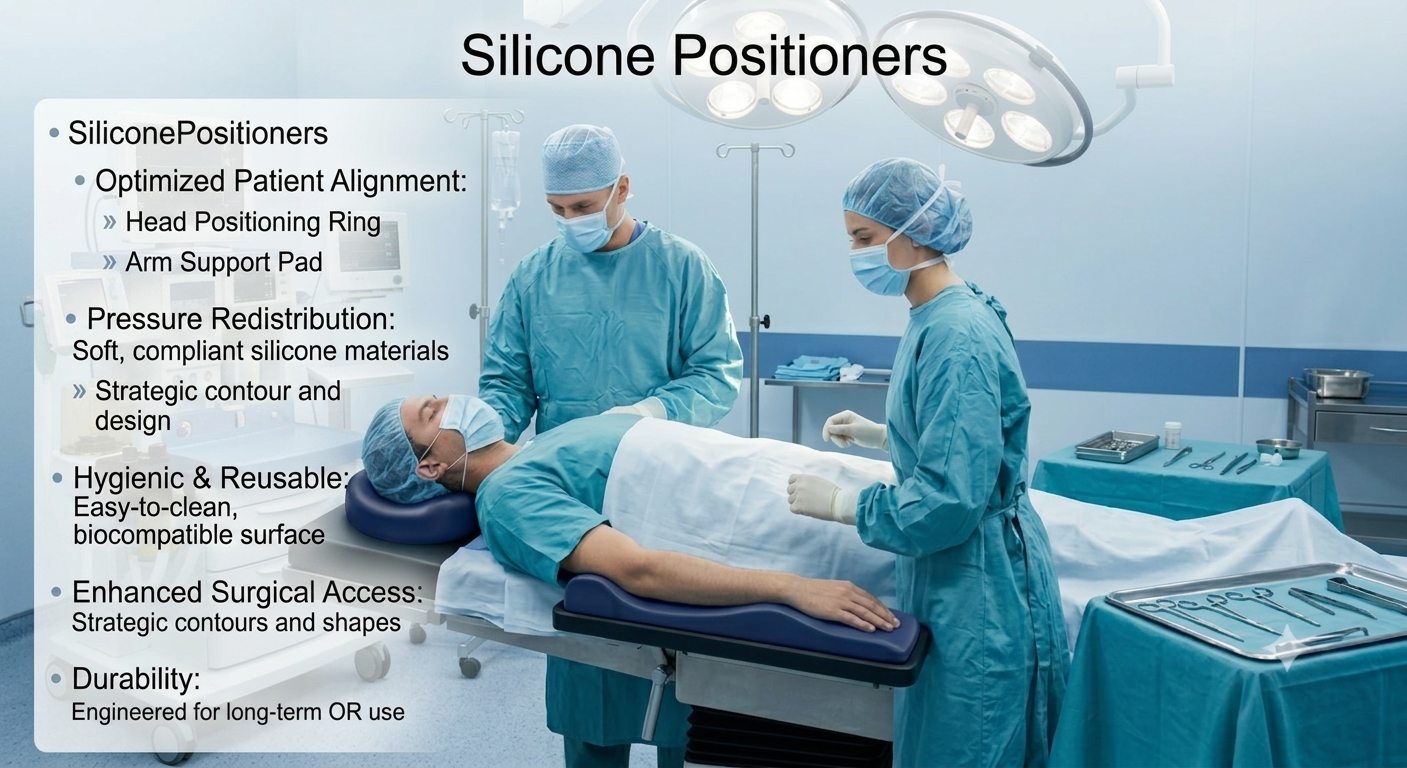
How do I clean silicone positioners?
Silicone is non-porous and can be wiped down with hospital-grade disinfectants, ensuring compliance with strict OR infection control protocols.
Why choose silicone over standard gel pads?
Unlike gel, silicone does not leak or harden over time, offering superior structural longevity and pressure redistribution properties for long-duration surgeries.