

In physical rehabilitation and daily clinical care, lower-limb positioning plays a critical role in patient comfort, joint alignment, and functional recovery. Proper foot elevation and precise pressure management are vital for reducing localized swelling, preventing severe heel pressure injuries, and alleviating discomfort during post-surgical healing. Specialized medical-grade Foot Cushions (also known as Footrest Pillows or Heel Elevator Cushions) serve as essential therapeutic tools in both clinical settings and home rehabilitation.
1. Understanding Medical Foot Cushions & Core Clinical Benefits
Unlike standard household bed pillows—which compress quickly under weight and fail to maintain joint stability—medical-grade foot cushions are constructed from structured, high-resilience foam designed to maintain continuous anatomical alignment.
Primary Physiological Benefits
· Targeted Heel Pressure Offloading: The calcaneus (heel bone) has minimal subcutaneous tissue, making it a high-risk zone for pressure ulcers. A dedicated Heel Elevator Cushion suspends the heel freely in the air, transferring lower-limb weight safely across the calf muscle.
· Enhanced Venous Return & Edema Reduction: Maintaining lower extremity elevation at 15 to 30 degrees above heart level utilizes gravity to facilitate venous blood flow and lymphatic drainage, significantly reducing post-traumatic or post-surgical swelling.
· Post-Surgical Joint Protection: Following procedures such as ankle arthroscopy or Achilles tendon repair, maintaining a neutral 90-degree ankle angle prevents involuntary foot rotation and protects healing surgical sites.
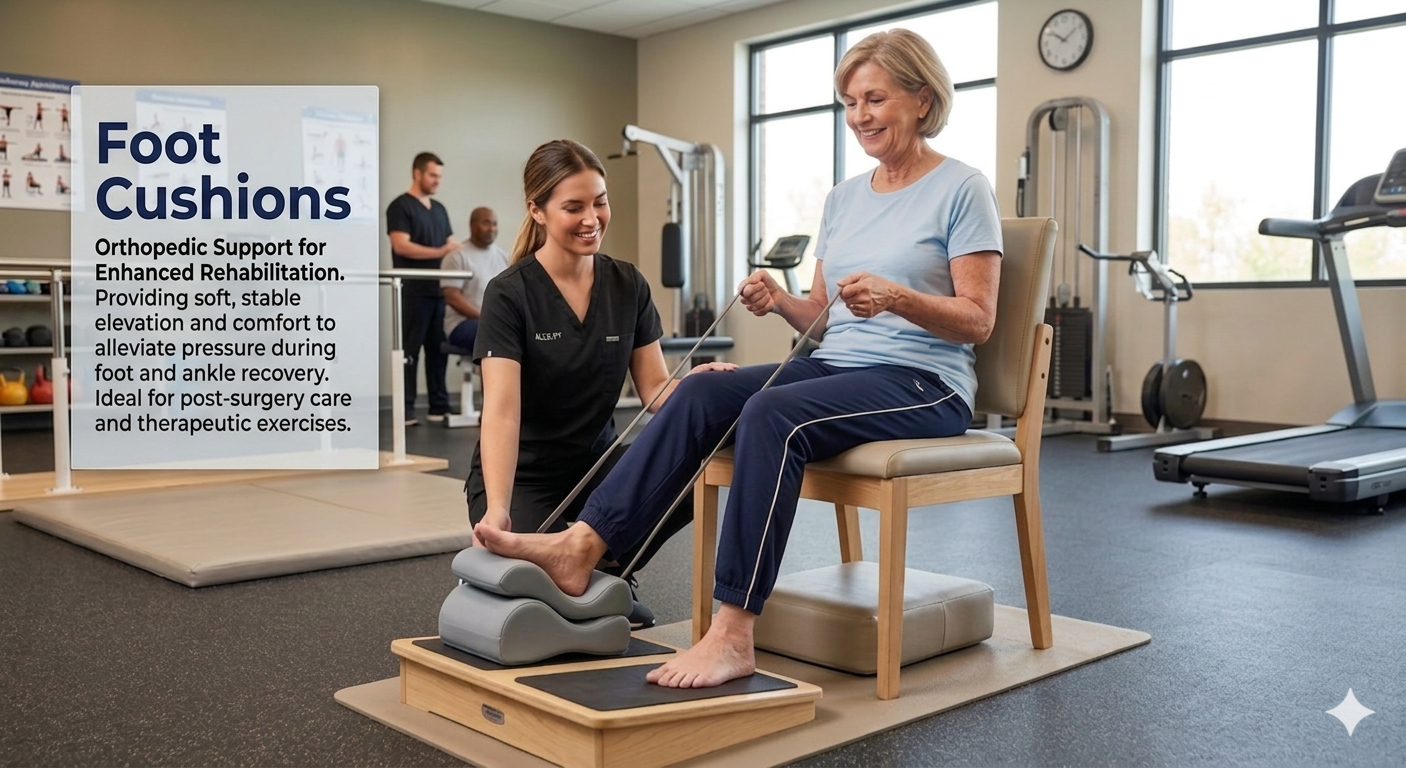
· Therapeutic Exercise Support: Physical therapists utilize firm contoured cushions as a stable platform for controlled ankle dorsiflexion, plantarflexion, and passive mobility exercises.
Clinical Insight: In our daily physical therapy practice, standard pillows often shift overnight, causing the patient's leg to roll outward and straining the hip joint. Utilizing a contoured foot cushion with high-density side bolsters keeps the limb stabilized throughout the night.
2. Selection Framework: How to Choose the Ideal Foot Cushion
When choosing a medical foot cushion, healthcare providers and caregivers should evaluate product specifications against the patient's mobility level, skin integrity, and post-surgical requirements.
|
Feature / Criteria |
Standard Foam Cushion |
Dual-Layer Composite Core (e.g., SHYICARE) |
|
Material Base |
Polyurethane Foam |
High-Density Support Base + Viscoelastic Memory Foam Top |
|
Pressure Redistribution |
Moderate |
Superior (Ideal for high risk of skin breakdown) |
|
Shape Retention |
Good |
Maximum long-term resilience |
|
Best Used For |
Short-term home elevation |
Post-surgical recovery, long-term bedridden care |
Key Selection Factors
1. Core Density & Material: High-density foam ensures the cushion does not collapse under prolonged leg weight. Dual-layer models combine orthopedic support with surface comfort.
2. Anatomical Contour: Central leg channels cradle the calf, while open heel cut-outs provide total pressure offloading.
3. Cover Hygiene & Safety: Look for fluid-resistant, antimicrobial PU covers for hospital settings, or breathable 3D mesh covers for home care. Concealed zippers are essential to prevent skin abrasion.
3. Usage Guidelines & Integrated Rehabilitation Exercises
Step-by-Step Positioning Protocol
1. Position the Support: Place the heel elevator cushion beneath the mid-calf down to the Achilles tendon. Avoid placing pressure directly under the popliteal fossa (back of the knee) to prevent vein compression.
2. Verify Heel Hover: Slide a hand under the patient's heel to confirm complete clearance above the bed surface.
3. Protect Knee Joint: Ensure a slight 5- to 10-degree flexion at the knee to avoid joint hyperextension.
Care & Maintenance
· Fluid-Resistant Covers: Wipe daily with hospital-grade disinfectant wipes.
· Removable Mesh Covers: Machine wash warm (40°C to 60°C) with mild detergent.
· Foam Core: Spot clean with a damp cloth; never submerge foam in water. Replace if permanent compression exceeds 15% of original height.
What is the main difference between a regular pillow and a medical heel elevator cushion?
Standard pillows compress rapidly, offering inconsistent elevation and zero pressure offloading for the calcaneus. Medical heel elevator cushions utilize structured high-density foam with anatomical contours specifically designed to suspend the heel and maintain 15–30 degree lower extremity elevation safely.
Can a foot cushion help prevent pressure ulcers in bedridden patients?
Yes. Clinical guidelines recommend heel elevation to suspend the calcaneus completely. Specialized contoured foot cushions distribute lower-limb weight evenly along the calf, eliminating direct pressure on vulnerable heel tissue.
Why select SHYICARE foot cushions for rehabilitation?
SHYICARE foot cushions integrate high-density medical foam cores, anatomical leg channels, and fluid-resistant antimicrobial covers, satisfying both clinical support requirements and daily patient comfort standards.