

1. Introduction to Healthcare Products and Their Growing Importance
In an era where personal well-being, preventive medicine, and home-based care have moved to the center of modern living, healthcare products (often referred to interchangeably as health supplies) have evolved far beyond basic reactive treatments. Today, the sector encompasses an expansive continuum of solutions engineered to support daily living, assist in post-operative recovery, prevent chronic injury, and optimize overall biological vitality. To fully understand this market, healthcare supplies and modern nutritional products can be systematically organized into four foundational pillars:
· Nutritional & Wellness Supplements: Daily formulations, including essential vitamins, minerals, amino acids, omega fatty acids, and standardized botanical extracts designed to bridge nutritional deficits and support systemic physiological pathways.
· Functional & Personal Care Products: Dermatological solutions, moisture-restoring gel gloves, therapeutic skin barriers, and topical formulations engineered for specialized hygienic and barrier care.
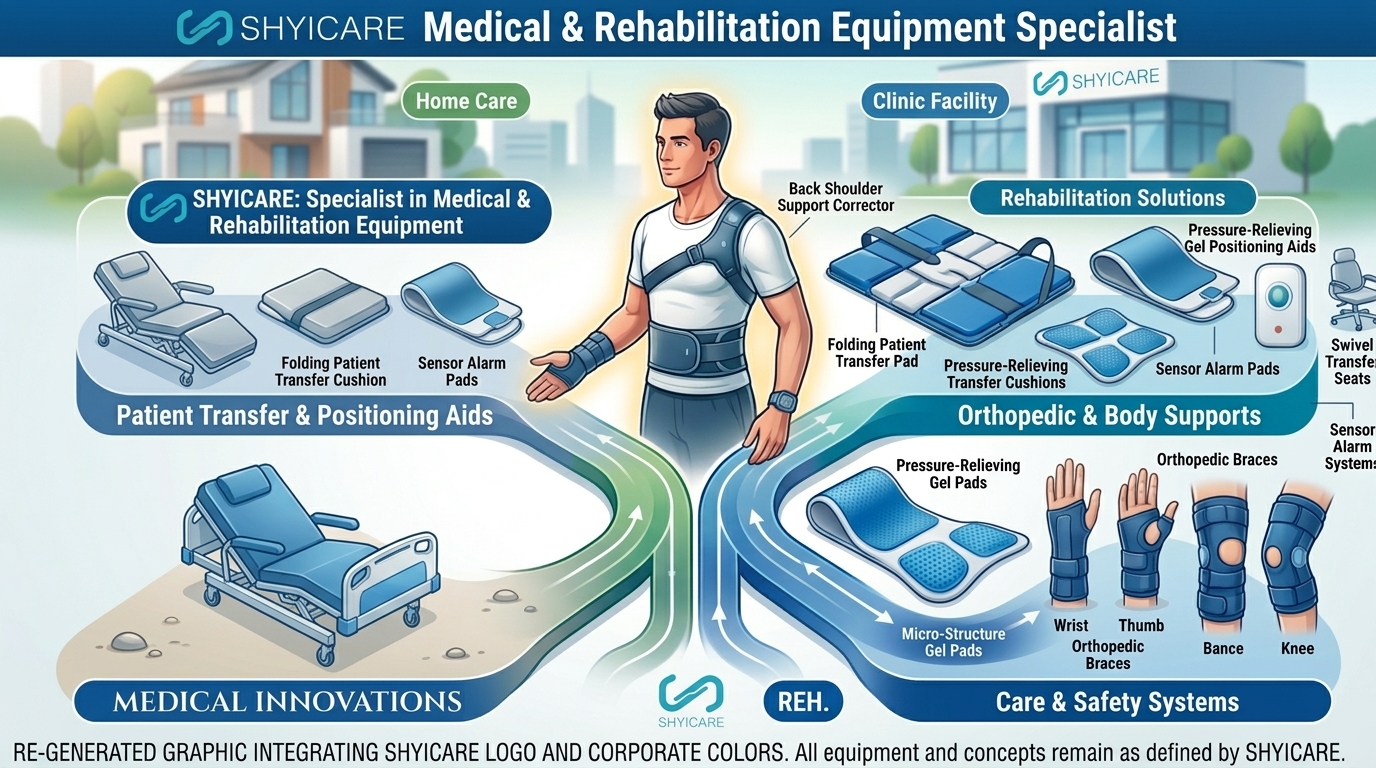
· Medical & Rehabilitation Equipment: Physical support systems, patient transfer cushions, posture correctors, sensor alarm pads, and pressure-relieving gel positioning aids utilized in both clinical facilities and home care settings.
· Diagnostic & Health Monitoring Devices: Digital blood pressure monitors, continuous glucose monitoring (CGM) systems, and wearable biometric sensors that provide real-time tracking of physiological vital signs.
The global cultural transition toward proactive health management and home care reflects a growing recognition that daily preventive care yields significantly superior long-term health outcomes compared to intervention after a crisis occurs. Rather than waiting for severe joint wear, mobility loss, or skin degradation to limit daily life, individuals and caregivers now actively integrate ergonomic supports, specialized orthopedic insoles, and targeted dietary supplements into their everyday routines. Similarly, family caregivers rely on specialized home care equipment to protect patient dignity, enhance safety, and reduce physical stress during daily routines.
However, because the global market is flooded with thousands of competing manufacturers, varying material standards, and aggressive promotional claims, navigating these options can quickly become overwhelming for consumers and healthcare professionals alike. Making informed, evidence-based choices is paramount to ensuring that the products you select deliver genuine therapeutic value, long-term durability, and uncompromised safety.
2. Understanding Your Specific Health Needs and Goals
Before investing in any healthcare, medical, or nutritional solution, the vital first step is conducting a thorough assessment of individual physical requirements or the specific care demands of a family member. Healthcare products are never one-size-fits-all solutions; a specialized support brace or patient transfer pad designed for acute post-surgical rehabilitation may prove completely unsuitable or restrictive for someone seeking light daily ergonomic support.
To establish an accurate, personalized baseline, evaluate your health profile across four primary dimensions:
· Targeted Health & Rehabilitation Objectives: Define exact functional outcomes. For instance, an individual suffering from acute wrist sprains requires specialized orthopedic wrist braces with targeted stabilization, whereas an elderly bedridden patient requires waterproof bed protectors, swivel transfer cushions, and pressure-relieving gel pads to mitigate tissue breakdown.
· Life Stage, Mobility, and Demographics: Physical requirements evolve significantly across different age groups and biological profiles. Senior citizens and individuals recovering from major surgery often require specialized transfer aids, wireless sensor pad alarms to prevent fall injuries, and targeted support sleeves to maintain joint stability and independent living.
· Daily Routine and Lifestyle Demands: An active individual managing mild joint discomfort may benefit from flexible gel knee sleeves and corrective footwear insoles paired with high-quality wellness supplements such as bioavailable collagen or joint matrices.
· Pre-existing Conditions and Material Sensitivities: Critical factors such as skin sensitivities, allergies to synthetic rubbers or latex, circulatory disorders, and diagnosed conditions like diabetic neuropathy must be carefully evaluated prior to selecting any topical or physical care product.
Crucially, self-diagnosis should never serve as a substitute for clinical expertise. Consulting a board-certified physician, physical therapist, or occupational health specialist ensures that chosen health supplies align precisely with medical diagnoses, avoiding unnecessary expenditures or physical complications.
3. Key Criteria: How Should I Choose the Right Healthcare Products?
When evaluating items across medical supply catalogs, pharmacy shelves, or digital storefronts, answering the fundamental question—"How should I choose the Healthcare Products that are right for me?"—requires looking well beyond superficial marketing and scrutinizing product engineering, material safety, and clinical utility.
To evaluate product quality with rigor, apply these critical benchmark criteria:
· Material Safety, Durability, and Biocompatibility: Always verify technical specifications. Medical-grade wearables, waterproof underpads, and joint supports must utilize non-toxic, hypoallergenic, and highly durable materials. Premier medical manufacturers, such as SHYICARE (Shyi Shin Industrial Co., Ltd.), specialize in utilizing high-grade materials—including specialized medical gels, breathable TPU membranes, and high-density ergonomic foams—that ensure skin protection, effortless sanitization, and lasting comfort.
· Third-Party Testing and Quality Certification Standards: Verification by independent regulatory and quality management bodies is non-negotiable. Look for recognized global manufacturing certifications—such as cGMP compliance, ISO standards, and FDA facility registrations—which guarantee that safety equipment like transfer pads, sensor alarm systems, and patient positioners perform reliably under daily operational demands.
· Ergonomic Design and Biomechanical Engineering: Opt for personal care products and rehabilitation equipment engineered in accordance with anatomical principles. Established brands like SHYICARE design specialized items—such as back shoulder support correctors, thumb and wrist braces, and folding patient transfer pads—specifically engineered to distribute mechanical force evenly, reduce caregiver strain, and promote natural physiological alignment.
· Spotting Marketing Red Flags: Exercise extreme caution when encountering unverified suppliers offering sub-standard medical gear lacking structural testing or making unrealistic claims of universal fit without adjustability. True medical solutions rely on rigorous physical testing and precise material specifications.
4. Safe Usage Practices and Integrating Products into Daily Routines
Selecting a top-tier healthcare product constitutes only half of a successful wellness strategy; correct, consistent, and safe execution ultimately dictates whether you achieve real physiological benefits and avoid accidental injury.
To integrate new care supplies, ergonomic supports, or recovery devices into a daily routine safely, follow these essential operational protocols:
· Adhere Strictly to Fit, Sizing, and Dosing Guidelines: Correct sizing is vital for orthopedic braces, support sleeves, and transfer aids. Wearing an improperly sized support brace can restrict vascular circulation or fail to stabilize vulnerable joints. Similarly, dietary supplements must be taken strictly according to professional guidance to avoid metabolic imbalances.
· Implement Rigorous Sanitation and Maintenance Routines: Reusable medical items—such as TPU underpads, gel moisture feather gloves, and transfer seat cushions—must be cleaned and sanitized regularly according to manufacturer directives to maintain hygiene, prevent bacterial growth, and preserve material integrity.
· Cross-Reference Compatibility and Environmental Safety: Ensure that mobility and transfer equipment fit seamlessly within your home environment without creating hazards. When introducing new wellness supplements, consult a clinician to screen for potential interactions with existing prescription medications.
· Maintain Optimal Storage Conditions: Preserve product integrity by storing all healthcare products and medical equipment in clean, dry environments away from direct sunlight, extreme temperature fluctuations, and excessive humidity, which can degrade polymers and active compounds.
Monitor Body Responses and Adapt Accordingly:Introduce new physical support devices or health regimens gradually. Track changes in comfort, skin condition, and mobility over a 14-day period. If you experience localized irritation, numbness, or heightened discomfort, discontinue use immediately and seek professional medical guidance.
How can I verify if a healthcare product or medical supply meets high quality standards?
High-quality products are defined by full material transparency, medical-grade components, and strict adherence to manufacturing certifications. Reputable companies like SHYICARE demonstrate quality through the use of advanced materials like medical gel and waterproof TPU, backed by rigorous quality control across their range of health supplies, transfer aids, and orthopedic supports.
Why is it important to consult a healthcare professional before using physical rehabilitation gear?
Consulting a physical therapist or medical doctor ensures that the specific device—whether an orthopedic brace, positioning cushion, or specialized support sleeve—matches your clinical diagnosis and rehabilitation phase, preventing improper alignment, circulatory restriction, or secondary injury.
Are higher-priced healthcare products always superior in performance?
Not necessarily. Premium pricing does not automatically guarantee therapeutic efficacy. Instead of relying on price tags, evaluate products based on material durability, ergonomic precision, ease of sanitization, third-party testing, and the verified manufacturing reputation of the brand.
How long does it typically take to observe tangible benefits from using healthcare products?
The timeframe depends entirely on the product category. Immediate physical support products—such as SHYICARE orthopedic braces, posture correctors, or patient transfer cushions—provide instant structural support and relief upon application. Conversely, systemic nutritional products and long-term therapeutic routines typically require 4 to 12 weeks of consistent daily use to yield significant physiological improvements.