

Size& Material
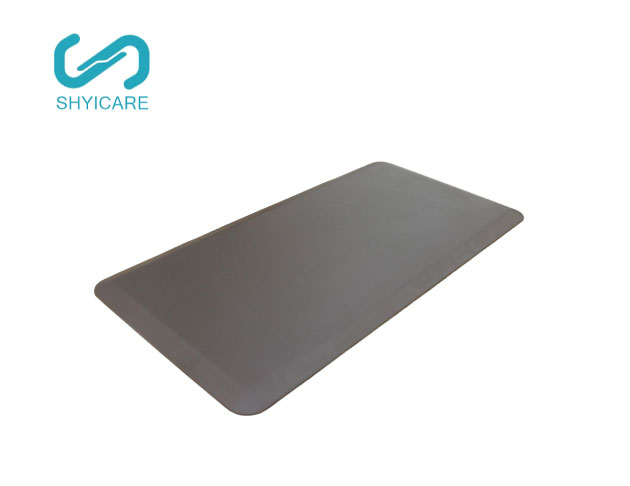
Size: 44*52cm
Material: PU Foam
Office Anti Fatigue Mat for Comfortable Standing and Workplace Ergonomics
The Office Anti Fatigue Mat is designed to provide a comfortable and supportive surface for people who spend extended periods standing while working. By combining a cushioned standing surface with an ergonomic design, the mat provides additional comfort beneath the feet and helps create a more supportive working environment.
Standing for long periods on hard flooring can place continuous stress on the feet and lower limbs. An anti-fatigue mat provides a softer and more resilient surface than conventional hard floors, allowing users to stand on a cushioned area while working at a standing desk, workstation, counter, or other standing-based work environment.
The Office Anti Fatigue Mat is particularly suitable for modern workplaces where standing desks and flexible workstations are becoming increasingly common. It can be placed in front of a standing desk to create a dedicated ergonomic standing area, allowing users to alternate between sitting and standing throughout the workday.
The cushioned construction is designed to provide a balance between softness and support. A suitable anti-fatigue mat should provide enough cushioning to improve standing comfort while remaining stable enough for users to maintain a secure standing position.
The mat can help provide a more comfortable surface beneath the feet compared with directly standing on hard surfaces such as tile, concrete, wood, or other rigid flooring. This makes it a practical ergonomic accessory for offices and other environments where prolonged standing is part of the daily routine.
The Office Anti Fatigue Mat can be used with both traditional desks and height-adjustable standing desks. As users change between sitting and standing positions, the mat provides a consistent cushioned surface for standing periods.
For standing desk users, the mat can create a clearly defined standing zone beneath the workstation. This can make it easier to maintain a comfortable working area while reducing the need to stand directly on hard flooring.
The ergonomic design is also suitable for users who frequently alternate between sitting and standing. Rather than being limited to permanent standing workstations, the mat can be incorporated into flexible office environments where employees adjust their working positions throughout the day.
The cushioning effect can help reduce the uncomfortable sensation associated with prolonged standing on rigid surfaces. While individual experiences vary, a supportive standing surface can contribute to a more comfortable workplace environment.
The Office Anti Fatigue Mat is not limited to corporate offices. It can also be used in home offices, reception desks, customer service counters, retail environments, laboratories, workshops, healthcare facilities, and other workplaces where employees spend significant amounts of time standing.
In a home office, the mat can be placed beneath a standing desk to provide additional comfort during remote work. Its ergonomic purpose makes it a useful complement to other office accessories such as ergonomic chairs, lumbar supports, monitor stands, footrests, and adjustable desks.
For reception areas and service counters, employees may remain standing while assisting customers or handling administrative tasks. An anti-fatigue mat can provide a dedicated cushioned area where standing employees can work more comfortably.
For retail environments, employees may spend considerable time standing while serving customers, organizing products, operating counters, or performing other daily tasks. A suitable anti-fatigue mat can provide additional cushioning beneath the workstation.
The mat may also be useful in workshops and industrial environments where employees work at fixed-height benches or stations. However, the mat should be selected according to the specific workplace conditions, including floor type, environmental exposure, footwear, equipment, and safety requirements.
For healthcare and professional environments, workplace ergonomics can be an important consideration when designing workstations. The Office Anti Fatigue Mat can be used as a supplementary ergonomic accessory to improve the comfort of standing work areas.
The cushioned surface can also provide a more comfortable area for users who frequently shift their weight while standing. Small movements and changes in standing posture are common during prolonged work, and an ergonomic mat can provide a more forgiving surface than hard flooring.
The mat should be positioned on a clean, flat, and suitable floor surface before use. Users should ensure that the mat remains stable and does not create a tripping hazard around the workstation.
Proper placement is particularly important in busy work environments. The mat should provide enough standing space without interfering with chairs, drawers, cables, equipment, walkways, or other workplace fixtures.
Depending on the specific product construction, an anti-fatigue mat may also provide additional traction beneath the user's feet. The actual slip resistance depends on the surface material, floor condition, footwear, and environmental factors, so users should verify the technical specifications for the intended application.
The surface should also be maintained according to the manufacturer's cleaning recommendations. Regular cleaning can help remove dust, dirt, and workplace contaminants while maintaining the appearance and performance of the mat.
For workplaces where liquids, oils, chemicals, or other substances may be present, users should confirm material compatibility and slip-resistance requirements before selecting the product. Not every office anti-fatigue mat is designed for industrial or chemical environments.
The Office Anti Fatigue Mat can also be considered as part of a broader workplace ergonomics program. Ergonomic comfort depends on multiple factors, including desk height, monitor position, footwear, standing posture, work habits, and opportunities to change position throughout the day.
An anti-fatigue mat should therefore complement, rather than replace, good ergonomic practices. Users who stand for extended periods may benefit from regularly changing positions, taking appropriate breaks, and adjusting their workstation to a comfortable working height.
The mat can be especially useful with height-adjustable desks because these desks allow users to transition between sitting and standing. The cushioned mat provides a dedicated standing surface whenever the workstation is raised.
For businesses, an ergonomic standing mat can be a simple way to improve the comfort of existing workstations without requiring major changes to the office layout. It can be introduced as an additional accessory for employees who prefer standing work.
For distributors and ergonomic product suppliers, the Office Anti Fatigue Mat can complement a broader range of workplace wellness products. It can be marketed alongside standing desks, ergonomic chairs, footrests, lumbar cushions, monitor stands, and other workstation accessories.
The product is also suitable for B2B applications where multiple workstations need ergonomic accessories. Offices, call centers, reception areas, retail stores, laboratories, and service counters can all potentially benefit from dedicated standing support surfaces.
When selecting an Office Anti Fatigue Mat, users should consider mat dimensions, thickness, cushioning characteristics, surface texture, underside stability, floor compatibility, cleaning requirements, workplace environment, and intended standing duration.
The thickness and firmness of an anti-fatigue mat can influence its overall standing feel. A mat that is excessively soft may feel unstable, while a mat that is too firm may provide limited cushioning. The appropriate balance depends on the intended application and user preference.
The design should also allow users to move naturally around the workstation. A practical office standing mat should provide sufficient standing coverage without unnecessarily obstructing the surrounding workspace.
Regular inspection is recommended for frequently used mats. Users should check for cracks, deformation, surface damage, curling edges, or deterioration that could affect comfort or workplace safety.
If the mat becomes damaged or develops raised edges, it should be removed from service or replaced as appropriate. Keeping the mat flat and properly positioned can help maintain a safer and more comfortable standing environment.
Overall, the Office Anti Fatigue Mat provides a practical ergonomic solution for people who spend extended periods standing at work. Its cushioned standing surface can provide additional comfort compared with hard flooring and can be integrated easily into modern office and workplace environments.
By combining ergonomic standing support, cushioned comfort, workplace flexibility, standing desk compatibility, and versatile applications, the Office Anti Fatigue Mat provides a practical solution for improving comfort in standing work areas.
What is an Office Anti Fatigue Mat used for?
An Office Anti Fatigue Mat is designed to provide a cushioned and more comfortable standing surface for people who spend extended periods working while standing.
Can it be used with a standing desk?
Yes. The mat is particularly suitable for standing desks and height-adjustable workstations, providing a dedicated cushioned surface when the user works in a standing position.
Can an anti-fatigue mat reduce foot and leg fatigue?
The cushioned surface can help improve standing comfort compared with hard flooring and may help reduce the discomfort associated with prolonged standing. Individual results can vary depending on the user, footwear, standing posture, and working conditions.
Where can the Office Anti Fatigue Mat be used?
It can be used in offices, home offices, reception areas, retail stores, service counters, laboratories, workshops, and other suitable standing work environments.
What should I consider when choosing an Office Anti Fatigue Mat?
Important factors include size, thickness, cushioning, surface texture, floor stability, cleaning requirements, workplace conditions, and the amount of time users spend standing.