


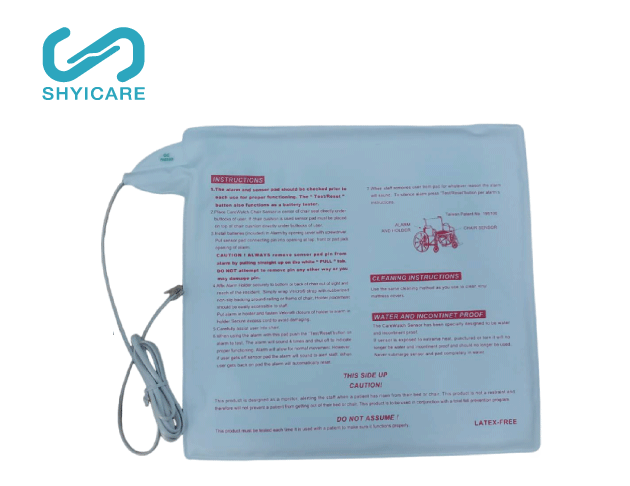
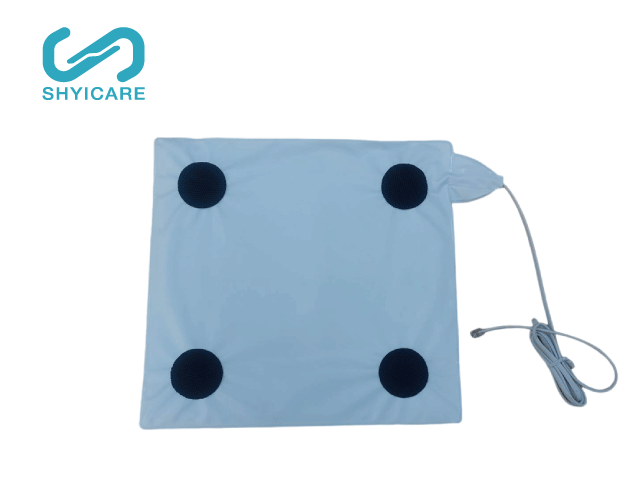
Size&Material
Material: PVC
Size:295*310mm
Wired Seat Cushion Alarm Sensor Pad for Patient Monitoring and Caregiving
A Wired Seat Cushion Alarm Sensor Pad is designed to work with a compatible chair alarm system to help caregivers monitor seated occupancy and receive alerts when a person leaves the monitored chair, depending on the system configuration. It can provide additional support for patient monitoring in healthcare facilities, nursing homes, assisted-living environments, and home-care settings.
A Chair Exit Alarm Sensor Pad is typically positioned on a chair according to the manufacturer's instructions and connected to a compatible alarm unit using a cable. Depending on the product design, the sensor detects changes in seated occupancy and sends a signal to the connected alarm unit when the configured conditions are met. The type of alert and detection performance depend on the sensor pad and the compatible alarm system.
The Wired Chair Sensor Pad can help caregivers become aware of changes in a person's seated status and respond when assistance may be needed. When incorporated into an appropriate care routine, it offers an additional way to monitor chair occupancy. However, it should be treated as a supplementary monitoring aid and not as a replacement for direct supervision, individualized care planning, or appropriate fall-prevention measures.
Before using a Patient Chair Alarm Pad, confirm that the sensor pad is compatible with the intended alarm receiver. Check the connector type, system requirements, and installation instructions before connecting the equipment. Position the pad correctly and arrange the cable to reduce potential tripping or entanglement hazards in the surrounding area.
Regular inspection and functional testing are important for maintaining the performance of a Seat Occupancy Alarm Sensor. Check the sensor pad, cable, and connections for visible damage, and test the complete alarm system according to the manufacturer's recommendations. Follow the specified cleaning and storage instructions, and discontinue use if the equipment is damaged or does not operate as expected.
What is a Wired Seat Cushion Alarm Sensor Pad used for?
A Wired Seat Cushion Alarm Sensor Pad is designed to work with a compatible chair alarm system to monitor seated occupancy and provide alerts when configured conditions are met. It can support caregiver awareness in healthcare and home-care environments.
How do I install a Wired Seat Cushion Alarm Sensor Pad?
Place the sensor pad on the chair according to the manufacturer's instructions and connect it to a compatible alarm unit. Confirm that the connection is secure and test the complete system before use.
Can this sensor pad work with any chair alarm receiver?
No. Compatibility depends on the receiver model, connector type, and system requirements. Confirm compatibility with the supplier before purchasing or connecting the sensor pad.
Where can a Wired Seat Cushion Alarm Sensor Pad be used?
Depending on the product specifications, it may be suitable for nursing homes, assisted-living facilities, healthcare settings, and home care. Always confirm that the product is appropriate for the intended environment.
How do I check whether the seat alarm sensor pad is working properly?
Follow the manufacturer's testing procedure to confirm that the sensor pad and connected alarm unit respond as expected. Inspect the cable and connections regularly, and stop using the equipment if damage or malfunction is detected.