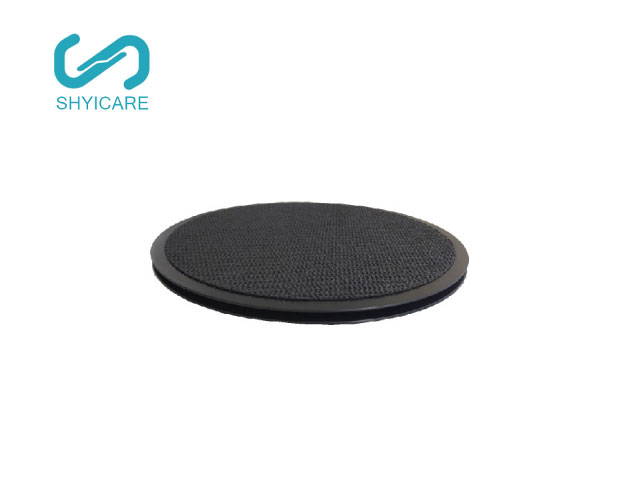


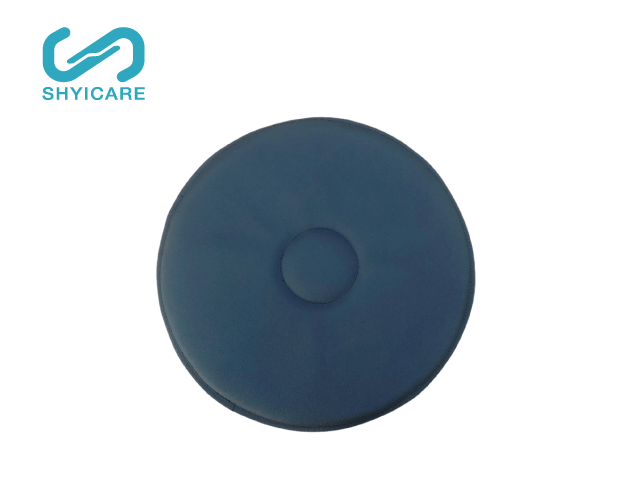
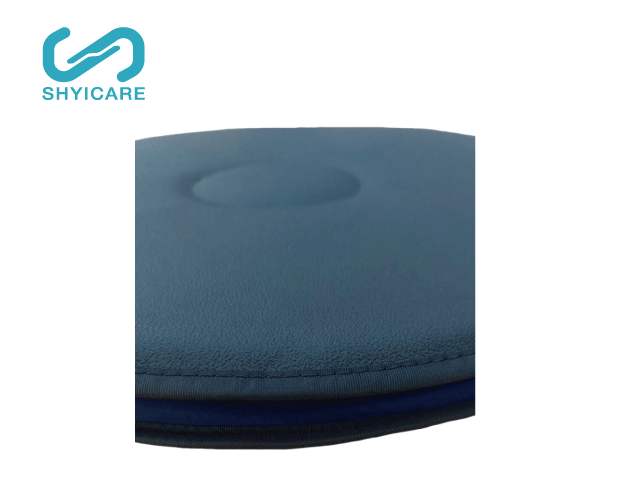
Size& Material
Sizes: Φ42cm
Material: Polyester
Swivel Transfer Seat Cushion for Easier Sitting, Turning, and Patient Transfers
The Swivel Transfer Seat Cushion is a practical transfer aid designed to help facilitate sitting, turning, pivoting, and repositioning movements. Its swivel function allows the seated user to rotate more easily while reducing the need for complex body movements during transfers.
Getting in and out of a chair, wheelchair, bed, or vehicle can be challenging for individuals with limited mobility. The Swivel Transfer Seat Cushion provides a rotating seating surface that can help make these movements more manageable by allowing the user to turn gradually instead of requiring a large twisting movement.
The cushion is placed on a suitable seating surface before use. Once the user is seated, the swivel mechanism allows controlled rotation of the seating surface. This can be particularly useful when the user needs to turn toward a wheelchair, bed, vehicle seat, or another adjacent surface.
The swivel design can also assist caregivers during patient handling and repositioning. By facilitating rotational movement, the cushion may help simplify certain transfer procedures and reduce the amount of manual repositioning required, depending on the user's mobility and the specific transfer situation.
Its compact and practical construction makes the Swivel Transfer Seat Cushion suitable for a variety of everyday environments. It can be used with appropriate chairs and seating surfaces in home care, nursing homes, assisted living facilities, rehabilitation environments, and other care settings.
The cushion may be particularly useful for elderly individuals, people with reduced mobility, and users who require additional assistance when transitioning between sitting and standing or moving from one seating surface to another. Caregivers can incorporate the cushion into appropriate transfer routines based on the user's physical abilities.
The Swivel Transfer Seat Cushion is also suitable for situations where space is limited. Its rotating function can help users turn within a confined seating area, making it a practical option for transfers involving wheelchairs, bedside seating, and vehicle seats.
For healthcare professionals and caregivers, the cushion provides an additional tool for supporting controlled patient movement. It should be used together with appropriate transfer techniques and according to the user's condition, weight, mobility level, and the requirements of the care environment.
The Swivel Transfer Seat Cushion combines rotating seating support, transfer assistance, comfortable cushioning, and practical mobility support to provide a convenient solution for everyday patient and personal transfer needs.
What is a Swivel Transfer Seat Cushion used for?
It is designed to assist users with turning, pivoting, repositioning, and transferring between suitable seating or support surfaces.
How does the swivel function help during transfers?
The rotating seating surface allows the user to turn more easily, which may reduce the need for extensive twisting or repositioning during certain transfers.
Who can use a Swivel Transfer Seat Cushion?
It may be suitable for elderly users, people with limited mobility, and individuals who require additional assistance when transferring or repositioning.
Where can the Swivel Transfer Seat Cushion be used?
It can be used in appropriate chairs and seating areas in homes, nursing homes, assisted living facilities, rehabilitation environments, and other care settings.
Can caregivers use it to assist with patient transfers?
Yes. It can be incorporated into appropriate patient transfer procedures as an additional handling aid. Caregivers should assess the user's condition and follow proper transfer techniques and safety procedures.